

Some of the links in this article are affiliate links, which means we may earn a commission if you click and make a purchase or submit your information. This comes at no additional cost to you and helps support our work. Learn more.
Gold and silver have been on one of the strongest runs in modern history. Prices surged to repeated all-time highs, investor interest exploded, and then almost overnight the market pulled back hard.
Headlines rushed to call it a crash.
But just as quickly as prices fell, metals began stabilizing and rebounding, leaving many retirement savers confused about what actually happened and what to do next.
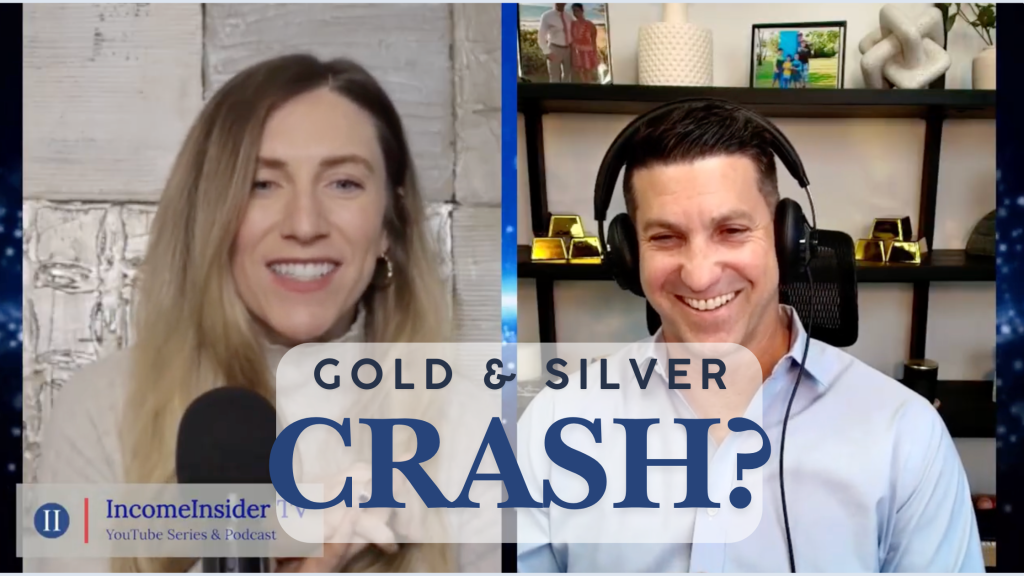
On a recent episode of IncomeInsider TV, Collin Plume, Founder and CEO of Noble Gold Investments, joined the show to unpack the volatility, explain the forces behind the move, and share what long-term buyers should focus on instead of short-term noise.
Below are the key takeaways for readers who prefer to skim or want a clearer framework for thinking about gold and silver right now.
Watch the Full Interview on YouTube:

Protect Your Retirement Savings
Noble Gold's Free Guide Reveals How to Buy Silver & Gold with Your 401(k) or IRA
Crash or Correction? What Actually Happened in Gold and Silver
According to Plume, the sudden pullback was not mysterious and it was not unprecedented.
After an extended and unusually strong run, metals finally hit a point where leverage, speculation, and momentum needed to reset. Silver in particular had surged dramatically over a short period of time, which made it especially vulnerable to sharp moves in both directions.
The key distinction Plume emphasized is simple. A fast drop after a massive run does not automatically mean the long-term case is broken.
Volatility feels worse when prices have been climbing steadily for months. When the move finally comes, it tends to arrive all at once.
Why Silver Dropped So Hard and Why It Bounced Quickly

Collin Plume on IncomeInsider TV
Silver’s move was sharper than gold’s, and Plume pointed to a familiar historical pattern.
During previous bull runs, including the 2008 to 2011 cycle, exchanges raised margin requirements. That forced leveraged traders to sell, which accelerated the downside. When selling pressure builds quickly, price declines can look extreme even when the broader trend remains intact.
What mattered more than the drop was what happened next.
As silver prices pulled back, buyers stepped in aggressively. Demand returned almost immediately, pushing prices higher within days. That kind of response suggests the market was correcting excess rather than abandoning the asset altogether.
Silver’s volatility works both ways. It falls faster, but it can also recover quickly when real demand shows up.
Silver Is No Longer Just an Investment
One of the most important themes Plume highlighted was silver’s evolving role.
In recent years, silver has increasingly been treated as a strategic metal rather than a purely speculative one. Governments and industries rely on it for military applications, electronics, energy infrastructure, and manufacturing. When demand becomes structural instead of optional, price behavior changes.
Plume argued that this shift helps explain why buyers rushed back in during the pullback. Silver is no longer viewed only as a trade. It is becoming a necessity.
That does not eliminate volatility, but it does change the long-term supply and demand equation.
Fed Headlines and Short-Term Market Confusion
Some of the selloff was blamed on speculation around Federal Reserve leadership and interest rate policy. Markets briefly reacted to the idea that rates might stay higher for longer.
Plume pushed back on that narrative.
From his perspective, political and economic incentives still point toward lower rates and continued pressure on the dollar. Even when headlines temporarily move markets, they do not necessarily change the underlying direction of monetary policy.
Short-term trading often responds to stories. Long-term trends respond to fundamentals.
The Bigger Picture: Debt, Currency Pressure, and Gold’s Role
Zooming out, Plume framed gold’s long-term appeal around three persistent forces.
First is rising debt and fiscal stress. Continued borrowing, repeated budget standoffs, and structural deficits erode confidence in fiat currencies over time.
Second is shifting global demand for US debt. Traditional buyers of Treasuries are becoming less reliable, forcing greater dependence on domestic and retail markets.
Third is currency diversification by central banks. Gold remains one of the few assets central banks consistently accumulate during periods of uncertainty.
Together, these factors help explain why gold continues to attract interest even during pullbacks.
Protect Your Retirement Savings
Noble Gold's Free Guide Reveals How to Buy Silver & Gold with Your 401(k) or IRA
What This Volatility Means for Retirement Savers
For retirement savers, the biggest takeaway is not about timing. It is about structure.
Plume stressed the importance of diversification, particularly in an environment where portfolios are increasingly concentrated in a narrow group of assets. Many retirement accounts are heavily exposed to equities that tend to move together during stress events.
Physical gold and silver offer a different profile. They are not designed to outperform everything else at all times. They exist to balance risk, preserve purchasing power, and reduce dependence on financial intermediaries.
That role becomes more valuable during volatile periods, not less.
Emotions, FOMO, and the Perfect Dip Trap
One of the most common mistakes Plume sees is emotional decision-making.
When prices rise, people fear missing out. When prices fall, they fear being wrong.
Trying to buy the exact bottom or sell the exact top usually leads to inaction or poor timing. Plume encouraged viewers to think about metals the way they think about insurance. It is something you hold because it reduces risk, not because it feels exciting every day.
Markets punish perfectionism. They reward patience and consistency.
Gold vs Silver: Why Many Buyers Own Both
Gold and silver serve different purposes.
Gold tends to be steadier and is closely tied to central bank behavior and currency confidence. Silver is more volatile but carries greater upside potential due to industrial demand.
Many buyers choose to hold both to balance stability and growth. The mix varies by individual, but the logic is straightforward. Different metals respond differently to economic conditions.
Red Flags to Watch Out for in the Metals Industry
Plume also addressed common industry pitfalls.
One major red flag is “free silver” promotions. These offers are often funded by inflated pricing elsewhere in the transaction. If something sounds too good to be true, it usually is.
Related: Home Storage Gold IRA - Scam or IRS-Approved?
Other warning signs include high-pressure sales tactics, artificial urgency, and scare-based messaging. Legitimate dealers should encourage education and allow buyers to move at their own pace.
Taking time, reading reviews, and asking direct questions remain the best defenses.
Physical Metals vs Paper Metals
Not all exposure to gold and silver is the same.
Paper products like ETFs and futures contracts offer convenience and liquidity but introduce counterparty risk. Mining stocks add business and operational risk on top of metal prices.
Physical ownership removes many of those layers. When you own the metal directly, there is no intermediary required to validate your claim.
That simplicity is part of the appeal for long-term holders.
Gold IRA vs Home Delivery: A Simple Distinction
The metals themselves are often the same. The difference is where the money comes from.
Home delivery uses personal funds and gives you direct possession. A Gold IRA uses retirement funds moved into a self-directed structure while preserving tax advantages.
Many buyers eventually use both, depending on their goals and stage of life.
Protect Your Retirement Savings
Noble Gold's Free Guide Reveals How to Buy Silver & Gold with Your 401(k) or IRA
Final Takeaway: Focus on the Long Game
Plume closed the conversation with a simple message.
Education comes first.
Understanding how metals work, how they fit into a broader plan, and what risks they actually mitigate matters more than reacting to headlines. Volatility is uncomfortable, but it does not automatically signal failure.
For long-term savers, the question is not whether prices move. It is whether your portfolio is built to withstand those moves when they happen.
