

Some of the links in this article are affiliate links, which means we may earn a commission if you click and make a purchase or submit your information. This comes at no additional cost to you and helps support our work. Learn more.
Silver has long been viewed as gold’s less glamorous cousin. Gold gets the attention during inflation scares, banking crises, and periods of political uncertainty. Silver, meanwhile, often sits in the background as a smaller, more volatile precious metal with a lower price point.
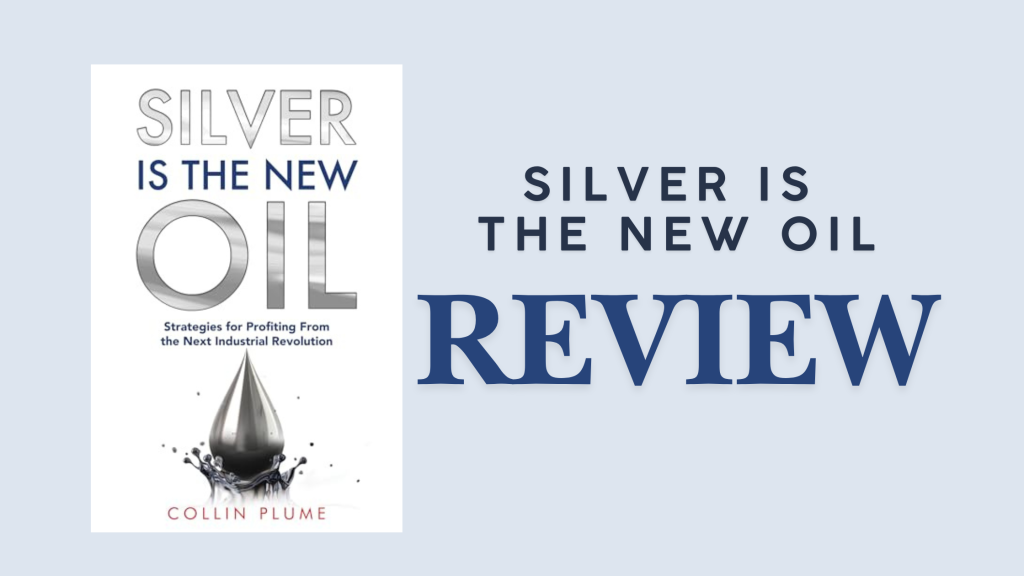
But in his book Silver Is the New Oil: Strategies for Profiting From the Next Industrial Revolution, Noble Gold Investments founder Collin Plume makes the case that silver deserves a much closer look.
The central argument of the book is simple but timely: silver is not just a precious metal. It is also an industrial metal that may play a critical role in the next wave of technological and economic development.
Plume argues that silver is poised to help power industries ranging from solar energy and electric vehicles to medical technology, artificial intelligence, electronics, and other high-growth sectors.
That makes the title, Silver Is the New Oil, more than just a catchy phrase. Plume is comparing silver’s potential role in the next industrial era to oil’s role in the last one.

Protect Your Retirement Savings
Noble Gold's Free Guide Reveals How to Buy Silver & Gold with Your 401(k) or IRA
A Book About Silver’s Changing Role
For decades, many Americans have thought about silver mainly in terms of coins, bars, jewelry, or inflation protection. It has been seen as a hard asset, a store of value, and in some circles, a hedge against paper currency risk.
Plume’s book appears to push readers to think bigger.
Rather than treating silver only as a defensive asset, Silver Is the New Oil frames silver as a strategic resource tied to future growth. The argument is that the modern economy is becoming more electrified, more digital, and more dependent on technologies that require physical inputs.
Silver, because of its conductivity, industrial usefulness, and role in clean energy and electronics, may become far more important than many people realize.
That is the core idea behind the book: silver may be hiding in plain sight.

Available on Amazon.com
Why Collin Plume Believes Silver Matters Now
Collin Plume is best known as the founder and CEO of Noble Gold Investments, a precious metals IRA company. Collin Plume is a precious metals industry expert and entrepreneur with more than 20 years of experience in alternative asset investing.
His background includes precious metals, real estate, and digital assets, which helps explain why the book looks at silver not just as a commodity, but as part of a broader wealth-building and diversification strategy.
The timing of the book is important. In recent years, more investors and retirement savers have become concerned about inflation, federal debt, currency debasement, banking instability, and overreliance on traditional paper assets.
At the same time, silver demand has increasingly been discussed in connection with solar panels, electric vehicles, semiconductors, AI infrastructure, and industrial production.
Plume’s thesis connects those two worlds.
On one hand, silver may appeal to people who are worried about the purchasing power of the dollar. On the other hand, silver may also benefit from real industrial demand. That combination is what makes silver different from gold. Gold is primarily a monetary metal. Silver is both a monetary metal and an industrial metal.
That dual role is the heart of the book’s appeal.
Related: Collin Plume Explains Gold's Recent Price Volatility
Key Takeaway #1: Silver Is More Than a Precious Metal
One of the biggest takeaways from Silver Is the New Oil is that silver should not be viewed only through the lens of precious metals investing.
Yes, silver has a long history as money. Yes, it is often purchased by people who want tangible assets outside of the banking system. And yes, it is commonly discussed alongside gold as a hedge against inflation and financial uncertainty.
But silver is also used in the real economy.
That industrial side is what Plume emphasizes. Silver has properties that make it useful in electronics, solar technology, medical applications, and other advanced industries. As the world becomes more dependent on electrification, automation, and energy-intensive technology, the demand story for silver may look very different than it did in the past.
For readers who only think of silver as “poor man’s gold,” this is probably the book’s most important reframing.
Key Takeaway #2: The Next Industrial Revolution Needs Physical Resources
A major theme of the book is that the future is not purely digital.
Even artificial intelligence, cloud computing, electric vehicles, solar panels, and advanced medical devices require physical infrastructure. Data centers need energy. Solar panels need materials. Electric vehicles need metals. Electronics need conductive inputs.
In other words, the digital economy still depends on the physical world.
That is where Plume’s oil analogy comes in. Oil powered much of the 20th-century industrial economy. Plume’s argument is that silver may become one of the essential resources of the next industrial era.
Whether or not readers fully agree with that comparison, it is a useful way to think about silver. It shifts the conversation away from short-term price speculation and toward long-term demand.
Protect Your Retirement Savings
Noble Gold's Free Guide Reveals How to Buy Silver & Gold with Your 401(k) or IRA
Key Takeaway #3: Silver May Be Undervalued Compared to Its Importance
Another apparent theme of the book is that silver may be underappreciated by mainstream investors.
Gold gets more attention from central banks, conservative investors, and financial commentators. Bitcoin gets attention from digital asset enthusiasts. Stocks get attention from retirement planners and Wall Street.
Silver often gets overlooked.
Plume’s case is that this neglect may create opportunity.
If silver demand rises because of industrial use, while investors also seek hard assets in response to inflation or currency concerns, silver could benefit from both sides of the equation. That does not mean silver is guaranteed to rise. It does mean the metal has a more complex investment case than many people assume.
This is especially relevant for retirement savers who are already looking at gold, precious metals IRAs, or other alternatives to a traditional stock-and-bond portfolio.
Related: Gold, Debt, and De-dollarization - What Retirement Savers Need to Know
Key Takeaway #4: Silver Is Volatile, So Strategy Matters
One point that should be emphasized in any serious discussion of silver is volatility.
Silver can move sharply. It often rises and falls more dramatically than gold. That can create opportunity, but it also creates risk.
For that reason, readers should be careful not to treat any bullish silver thesis as a guarantee. Even if Collin Plume’s long-term argument is compelling, silver prices can still be affected by interest rates, recession fears, industrial slowdowns, investor sentiment, mining supply, currency moves, and broader commodity cycles.
The best way to read this book is not as a promise that silver will make anyone rich. It is better understood as a case for why silver deserves to be studied, especially by people who are already thinking about diversification, inflation protection, and the future of industrial demand.
Key Takeaway #5: The Book Is Best for Readers Interested in Alternative Assets
Silver Is the New Oil will likely appeal most to readers who are already open to alternative assets.
That includes people interested in:
Retirement diversification, precious metals, inflation hedges, gold and silver IRAs, hard assets, commodity cycles, de-dollarization, and the connection between technology and resource demand.
The book may also be useful for readers who have considered buying gold but have not thought deeply about silver. Plume’s argument gives silver its own investment identity rather than treating it as a cheaper version of gold.
However, readers looking for a neutral academic treatment of silver markets should understand that Plume comes from the precious metals industry. That does not invalidate the book, but it does mean readers should approach it as a strong argument from someone who believes in the asset class, not as a detached textbook.
What the Book Gets Right
The strongest part of the book’s thesis is that it connects silver to real-world demand.
Many precious metals discussions focus heavily on fear: inflation, debt, currency collapse, banking instability, or geopolitical turmoil. Those issues matter, but they are only part of the story.
Silver’s industrial role gives the metal another layer of relevance. Plume’s book appears to do a good job of highlighting why silver may matter even outside the typical “safe haven” conversation.
That makes the book timely. It arrives at a moment when many Americans are worried about the dollar, but also watching massive investment flow into AI, energy infrastructure, electric vehicles, and advanced technology. Silver sits at the intersection of both conversations.
Protect Your Retirement Savings
Noble Gold's Free Guide Reveals How to Buy Silver & Gold with Your 401(k) or IRA
Where Readers Should Be Careful
The main caution is that silver is not a sure thing.
A strong demand story does not automatically translate into short-term profits. Markets can stay undervalued longer than expected. Industrial demand can fluctuate. New technologies can reduce material intensity. Mining supply can change. Investor enthusiasm can overshoot.
Readers should also be careful with the phrase “the new oil.” It is a powerful metaphor, but oil and silver are very different markets. Oil is consumed at enormous scale and is central to transportation and energy. Silver has different supply-demand dynamics, different market structure, and different price drivers.
So the title should be understood as a provocative investment thesis, not a literal one-to-one comparison.
Final Verdict: A Timely Case for Paying Attention to Silver
Silver Is the New Oil is best understood as a bullish, accessible case for why silver may play a larger role in the years ahead.
For readers worried about inflation, currency risk, and overexposure to traditional financial assets, the book offers a reason to look at silver more seriously. For readers interested in technology, energy, and the next phase of industrial growth, it explains why a centuries-old precious metal may still be highly relevant in the modern economy.
The book’s core message is that silver may no longer belong in the background. If Plume’s thesis is right, silver could become one of the more important strategic resources of the next decade.
That does not mean readers should rush into silver without doing their homework. But it does mean silver deserves a place in the conversation, especially for those thinking about long-term diversification and the future of hard assets.
Bottom line: Silver Is the New Oil is a timely and thought-provoking book for readers who want to understand why silver is attracting renewed attention from precious metals advocates, alternative asset investors, and those watching the next industrial revolution take shape.
